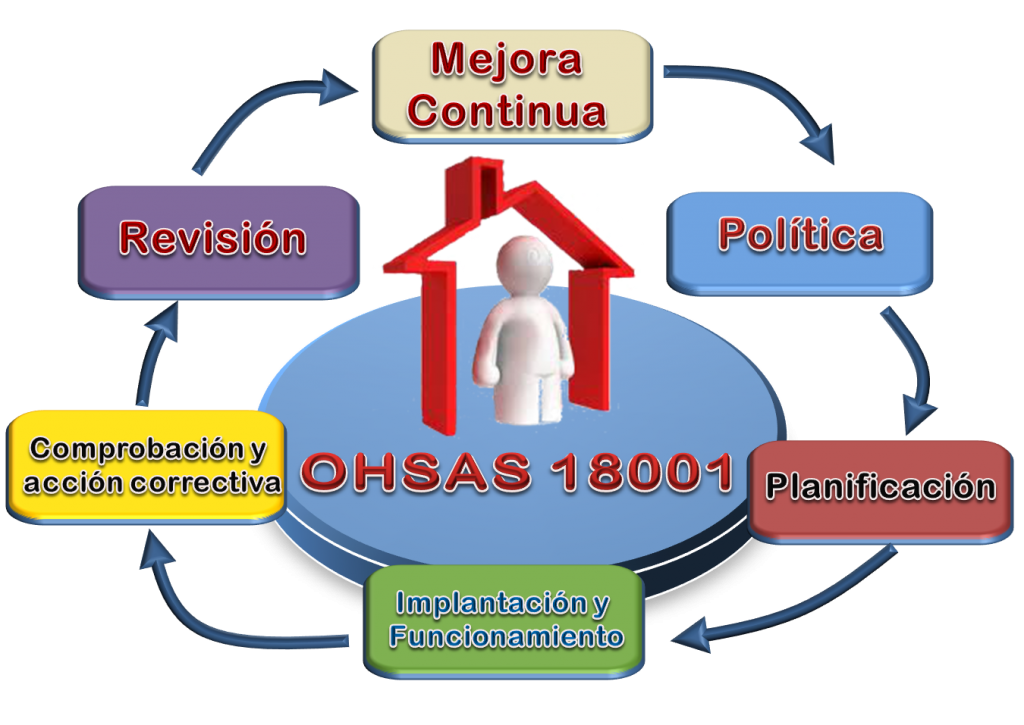
Sistema de Gestión en Seguridad y Salud Ocupacional, el cual se encuentre basado en la norma OHSAS 18001:2007, lo que significa que cada vez son mas las compañías que deciden implementar un sistema de gestión de la salud y la seguridad en el trabajo (SGSST) como una parte muy importante para mejorar su estrategia en cara a lograr una optima gestión de riesgos, lo que permitirá adaptarse de manera eficiente a cualquier cambio legislativo y ademas permitirá proteger a todo su personal.
El término OHSAS, es una abreviatura que en el idioma ingles se relaciona con el acrónimo de Occupational Health and Safety Assessment Series, mientras que dentro del texto de la norma se hace referencia de manera frecuente la abreviatura OH&S, que significa Occupational Health and Safety, lo cual en español no es mas que Salud y Seguridad Laboral.
Por tanto un Sistema de Gestión de la Salud y la Seguridad en el Trabajo (SGSST) tiende a fomentar de manera activa la creación de entornos laborales seguros y saludables, ya que ofrece un marco en el cual le permite a la compañía u organización identificar y controlar de manera satisfactoria los mas resaltantes riesgos de salud y seguridad, asimismo permite reducir el potencial de accidentes, contribuir en el cumplimiento de las leyes y también a mejorar el rendimiento del personal en general.
De esta manera se puede decir que la norma OHSAS 18001, básicamente se trata de una especificación del estándar, que es reconocido a nivel mundial para ser aplicado a los sistemas de gestión de la salud y la seguridad en el trabajo. Es así como una serie de importantes organismos en el comercio, así como otros organismos internacionales de normas y de certificación la han adoptado para cubrir aquellos vacíos donde no existe ninguna norma internacional que pueda ser certificable a través de un tercero, independiente de los anteriores.

Es así como la norma OHSAS 18001 se ha concebido de tal modo que resulte ser totalmente compatible con los estándaresISO 9001 e ISO 14001, para estar en la capacidad de apoyar a todas aquellas organizaciones que puedan cumplir satisfactoriamente con sus obligaciones relacionadas a la salud y la seguridad. Si una compañías quiere demostrar su capacidad en el cumplimiento de losrequisitos contemplados en una gestión de calidad, buscara certificar en la norma ISO9001, mientras si desea demostrar su buena gestión ambiental, buscara certificar en la norma ISO 14001, y de la misma manera las OHSAS demostraran un optimo manejo en temas de seguridad y salud del personal de cualquier compañía.
Lo cierto es que desde hace ya bastante tiempo, esta norma se viene convirtiendo en un importante punto de referencia para una serie de países, que en su legislación no contemplan reglamentos específicos que ayuden a la prevención de riesgos, como es el caso de Alemania, donde hace mucho tiempo ya se viene obligando a las empresas relacionadas con la construcción y refinerías, a cumplir con lo contemplado en esta norma y pasar sus respectivas auditorías.
Si bien es cierto que las normas OHSAS se vienen implementando lentamente, en muchos países de América Latina como el nuestro, se está considerando este estándar como una base o referencia para gestionar de manera eficiente la prevención de riesgos, con lo que de a poco se viene convirtiendo en un requisito esencial, el cual ya fue establecido por algunas importantes compañías locales y multinacionales, por ser la mejor referencia internacional en lo que a prevención de riesgos se refiere.
Un aspecto muy importante de este estándar es su flexibilidad, ya que su implementación no lo convierte en algo contraproducente, ya que uno de sus principios básicos, es brindar la prioridad a cumplir con las exigencias contempladas dentro del marco legal vigente de cada país, con lo que OHSAS se convierte en un magnifico complemento para alcanzar los objetivos contemplados en un sistema de gestión de este tipo.